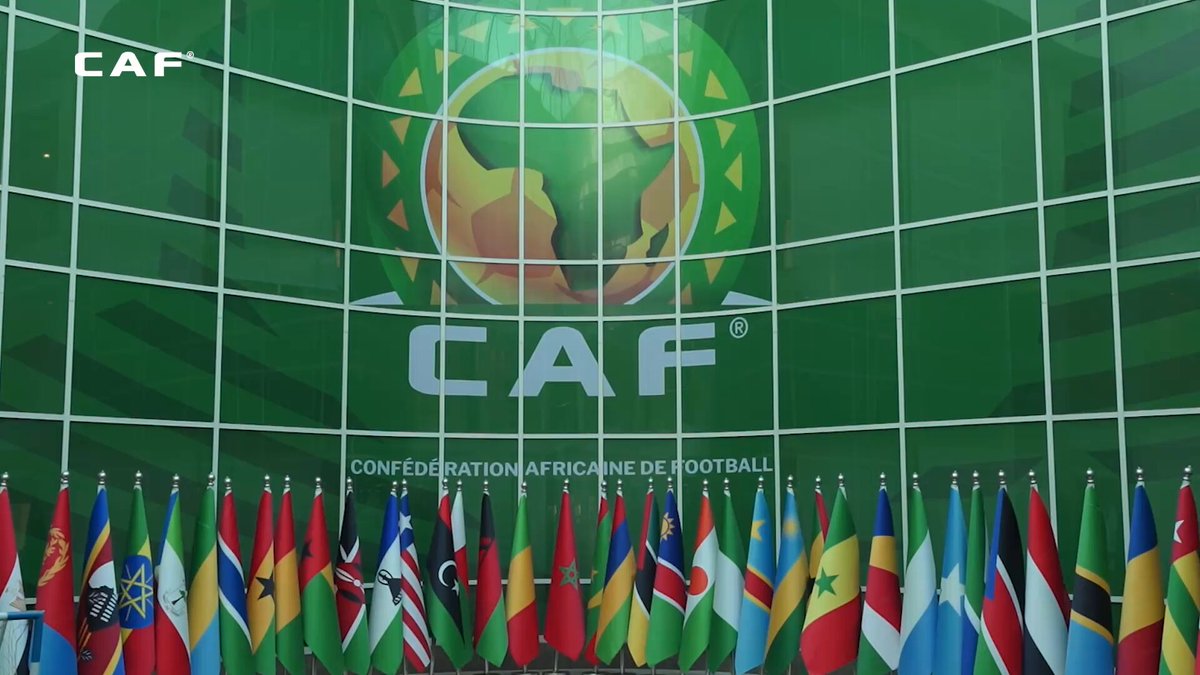
At the Confederation of African Football’s Extraordinary General Assembly held in Cairo, Egypt on 12th May 2025 Patrice Motsepe was re-elected unopposed for another 4-year term as CAF President. Notably, representatives were also elected into the CAF Executive Committee as well as the FIFA Council.
WHAT IS THE MAKE-UP OF THE CAF EXECUTIVE COMMITTEE
With 54 Member Associations affiliated to it, CAF is the second largest voting bloc at FIFA elections. It perhaps explains why FIFA President Gianni Infantino was in attendance at the Congress. Including the President, the Executive Committee is comprised of a total of 21 members with a statutory provision for 1 female member. CAF also has six (6) geographical divisions known as zones/zonal unions which has 13 members – Northern, Western A, Western B, Central, Central-East and Southern. Apart from the latter which has 3 members elected into the EXCO the other five zones each have 2 members elected into the Executive Committee. There are also 6 representatives elected into the FIFA Council. They assist at the meetings of the Executive Committee.
The full list of those elected are as follows:
Patrice Motsepe (South Africa) President
Samuel Eto’o (Cameroon)
Hany Abo Ride (Egypt)
Fouzi Lekjaa (Morocco)
Kanizat Ibrahim (Comoros)
Hamidou Djibrilla Hima (Niger)
Ahmed Yahya (Mauritania)
Souleymane Waberi (Djibouti)
Mustapha Ishola Raji (Liberia)
Bestine Kazadi Ditabala (D.R.C)
Wallace Karia (Tanzania)
Kurt Simeon Okraku (Ghana)
Sadi Walid (Algeria)
Feizal Sidat (Mozambique)
Samir Sobha (Mauritius)
A LOOK AHEAD TO SOME OF THE ISSUES THE EXECUTIVE COMMITTEE MAY FACE
STADIUMS
One of the issues the new leadership has to contend with is lack of adequate stadiums. Several African teams don’t play their home matches in their countries due to non-approval of their stadiums by CAF to host matches in top tier competitions. The stadium categories provided for under the Club Licensing Regulations 2022 edition range from Category 1 to 4 with the latter being certified for hosting top events such as the African Cup of Nations and the Finals of CAF’s interclub competitions.
In 2023, CAF Secretary General Veron Mosengo-Omba stated that only 5 or 6 countries are able to host the AFCON. These are likely to include the following with international standard stadiums capable of hosting African and world football tournaments: Morocco (hosts for the next men and women’s AFCON as well as co-hosts for the 2030 FIFA World Cup), Egypt (host of the just concluded U-20 AFCON) and South Africa (2010 World Cup host and bidders for the 2031 FIFA Women’s World Cup).
Evidence of this can be seen in the fact that the African Nations Championship (CHAN) scheduled for February 2025 had to be postponed for 6 months. The statement from CAF was that its experts had advised that more time is required to ensure the infrastructure and facilities for the finals are at the levels necessary. Halfway into their tenure the newly formed Executive Committee would have to make a decision on which country will host the 2029 AFCON. Interestingly, Ethiopia has confirmed they will be bidding despite not having a stadium suitable for international matches.
GROWTH OF REVENUES IN AFRICAN FOOTBALL
Financing the growth of African football to enable it compete internationally is another issue for the consideration of the Executive Committee. CAF has been gradually increasing the prize pot at each of its competitions to be distributed amongst participating countries and clubs. For example, there is going to be a USD 3.5 million windfall for the winners of the CHAN; a 75% increase that is part of a broader 32% increase in total prize money of USD 10.4 million for all participants.
CAF has also recently extended their sponsorship agreement with energy giant TotalEnergies for the period 2025-2028. They will now sponsor 12 major CAF events and CAF competitions. The new Executive will have to also contemplate whether or not to continue with what has been a fruitful partnership for CAF generating north of a billion dollars since 2018. Other partnerships recently secured include Africa Global Logistics as the Official Logistics partner and Royal Air Maroc as the Official Global Partner. Hassan El Kamah who is the Commercial Director at CAF recently posted on his LinkedIn account that CAF has 16 global partners, over 185 broadcasters, 2.5B digital views and a 1.5B TV audience.
GOVERNANCE AND REGULATORY HURDLES
A hot potato for the new administration will be the governance of the organisation itself from Cairo as well as regulatory compliance by its 54 members across the continent. CAF is no stranger to allegations of mismanagement, corruption and poor governance. In the months leading to the election of Patrice Motsepe in 2021, former President Ahmad Ahmad was initially banned for 5 years by FIFA for breaches of the FIFA ethics code – later reduced to 2 years after an appeal to the Court of Arbitration for Sport – enabling Motsepe to go unopposed as the other candidates all withdrew on the eve of the election.
More recently, the Secretary General Veron Mosengo-Omba was investigated for fraud and forgery before being cleared by Swiss Public Prosecutors after suspicious payments were made into Swiss banks. There was an internal investigation by CAF into allegations of misconduct with reports that Motsepe wrote to the Executive Committee to resolve the matter. Whether or not that will be accomplished during the tenure of this new Executive remains to be seen.
RELATIONSHIP WITH FIFA
An expanded 48 team FIFA World Cup to be hosted in the United States in 2026 will feature a total of 9 African teams. The addition of 4 more spaces for the continent may very well result in an African team going one step further than Morocco who made it to the semi-finals of the 2022 edition.
The leadership from CAF in terms of the supervision of qualifiers and related logistical support to its members will be pivotal for African teams. The new EXCO will most certainly not want to see a repeat of what transpired between Nigeria and Libya in their AFCON qualifiers last year. The Super Eagles boycotted the game on the basis that they were left stranded at the airport with no food, drink or internet. Libya in reply stated they received similar treatment when they went to Nigeria. CAF eventually sided with Nigeria and awarded them 3 points with Libya indicating they would appeal all the way to the Court of Arbitration for Sport.
Recently, ideas and suggestions for a 64 team World Cup in 2030 have been advanced by South America’s governing body CONMEBOL, firstly at a FIFA Council meeting in March 2025 and then again by its President Alejandro Dominguez in his opening statement at CONMEBOL’s 80th Congress. The elected 6 CAF members into the FIFA Council will have to decide whether or not to support this idea. UEFA President Alexander Ceferin has already been blunt in his opposition to the idea.
The new FIFA Club World Cup is also due to kick off and with it comes a lot of financial benefits for the African clubs; Al Ahly (Egypt), Esperance Sportive de Tunis (Tunisia), Mamelodi Sundowns (South Africa) and Wydad AC (Morocco) are each set to receive USD 9.5 million. How this new competition evolves and its impact on the domestic leagues of African participants is something the new Executive will have to monitor. There is the fear that clubs who take part in this competition as well as those in the African Football League will have such a huge financial gap over their domestic rivals; making them juggernauts and destroying any form of competition on the pitch.